I read an article recently about tourists travelling to attractions that literally do not exist.
AI-generated cable cars in Thailand. Fake Christmas markets in London. Entirely fictional destinations spreading online as though they are real places you can visit.
At first glance, it sounds absurd. Surely nobody is booking trips around places invented by AI?
But the more I thought about it, the more unsettling it became. Because travel imagery has been moving in this direction for years.
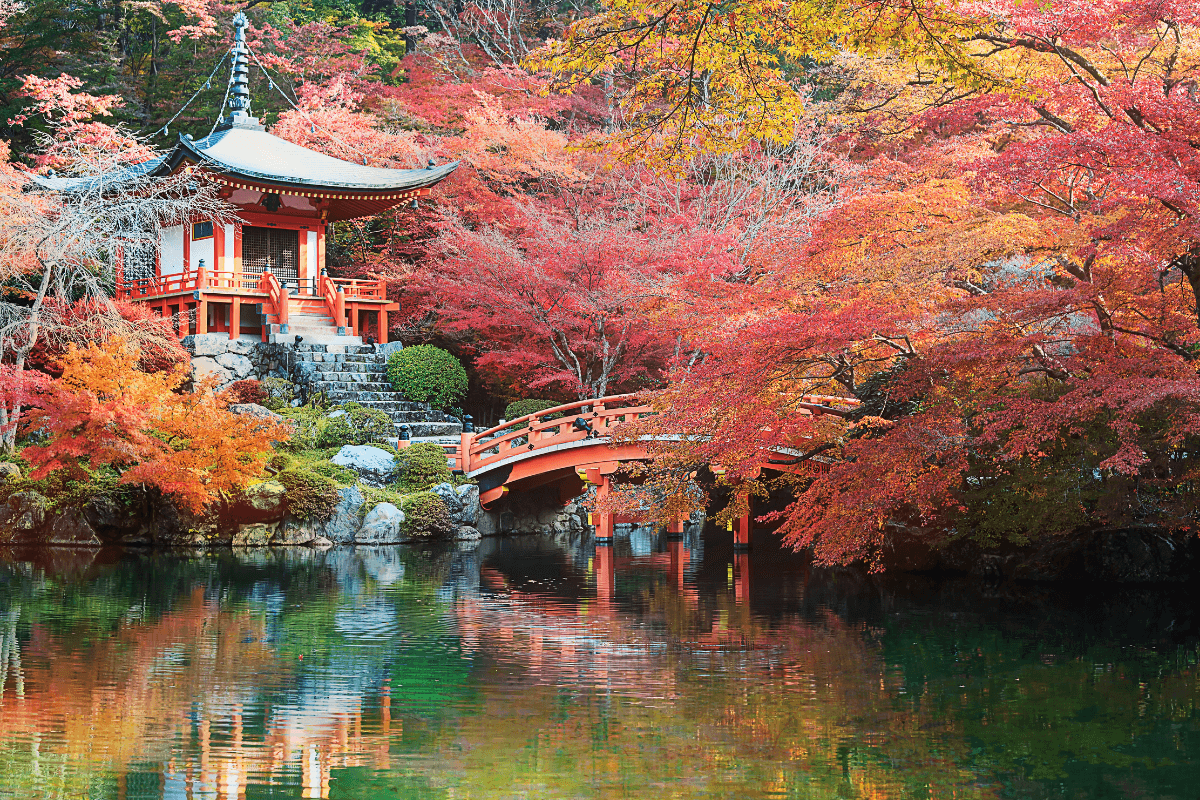
As a Japan travel specialist, I have spent a long time pushing back against “travel as content” culture. The increasingly polished, algorithm-friendly version of travel that prioritises the image over the actual experience. The endless search for places that look cinematic on Instagram rather than places that feel meaningful in real life.
And Japan sits in a particularly strange position within all this.
The Problem With Real Japan
Nearly ten years ago, I was working on brochure design for Japan holidays. My boss kept sending my pages back.
“These look fake,” she insisted.
I remember having to defend perfectly genuine photographs.
“No, honestly, the leaves really are that red.”
“Yes, the blossom really does look like pink clouds.”
“Yes, this place actually exists.”
Eventually our in-house photographer had to back me up before she believed me.
And the truth is, I understood her reaction. Parts of Japan really do look almost unreal:

Autumn colours in Kyoto can appear impossibly saturated. Snow-covered onsen towns look like film sets. Cherry blossom season often feels less like weather and more like special effects.
Japan already sat right on the edge of disbelief long before AI arrived.
The Osaka Castle Image That Stopped Me
Recently, an image stopped me mid-scroll. It appeared as a sponsored advert in my news feed, promoting Japan holidays to me. (What can I say, the algorithm knows my tastes.)
At first glance, it looked beautiful. Osaka Castle surrounded by cherry blossom, with Mount Fuji rising perfectly behind it in the distance:

The problem?
That view does not exist.
Osaka Castle is in the middle of Osaka city. Mount Fuji is nowhere near it. Geographically, the image is complete nonsense.
And yet the image works.
Not because it is accurate, but because it feels emotionally true.
It compresses every recognisable symbol of “dream Japan” into a single frame:
- Mount Fuji
- Sakura
- Historic castle
- Perfect weather
- Cinematic light
It is not documenting a real place. It is manufacturing a feeling.
And I think that represents a significant shift in travel marketing.

From Real Destinations to Emotional Shorthand
Traditionally, travel photography had a fairly simple purpose: show people somewhere real. Of course images were curated. Tourist boards chose flattering angles. Brochures exaggerated. Instagram filters polished reality.
But there was still an assumption underneath it all that the place itself existed.
Now we are moving into something more ambiguous. Travel imagery is increasingly becoming emotional shorthand rather than documentation.
Not:
“This is somewhere you can go.”
But:
“This is how Japan is supposed to feel.”
That subtle difference matters.
Because once geography, atmosphere, season, and reality itself become flexible, travellers are no longer choosing destinations based on places. They are choosing moods assembled by algorithms.
Why This Matters for Japan Travel
Japan is especially vulnerable to this shift because so much of the country genuinely does appear dreamlike already. That is part of its appeal.
But it also means the line between extraordinary reality and convincing fiction is becoming harder to see online.
Ironically, I suspect this may eventually make genuine expertise more valuable again.
Not just recommendations. Not just “hidden gems.” But actual lived understanding of place. Because in an AI era, one of the most useful things a travel specialist may be able to say is:
“Yes, this place is real.”

I create thoughtful, reality-based Japan journeys for travellers who want something deeper than viral “must-see” lists and AI-perfect imagery.
Because Japan is already extraordinary enough without inventing new versions of it.