I went to a newly opened aquarium in Kobe recently and realised something.
Japan doesn’t really do aquariums. It stages them.

This was AQUARIUM×ART átoa: part aquarium, part art gallery, part library, part small urban zoo (there are penguins and capybaras on the roof!) Inside, there are dark halls, swirling tanks, projections, soundscapes, and carefully lit displays that feel closer to an installation than an exhibit.
It’s compact, slightly surreal, and completely brilliant.
A few years earlier, after a conference in Tokyo, I wandered into Shinagawa Aquarium on a whim. It had glowing jellyfish corridors, touchscreen displays built into tanks, seals drifting through blue-lit pools, and whole sections choreographed with music and light.
That was when it clicked.
Japan had quietly perfected the Small Urban Aquarium.

Not Just “Look at This Fish”
In most countries, aquariums are straightforward. Big tank. Interesting fish. Information board. Gift shop. In Japan, someone clearly thought: Yes, but what if we made it beautiful?
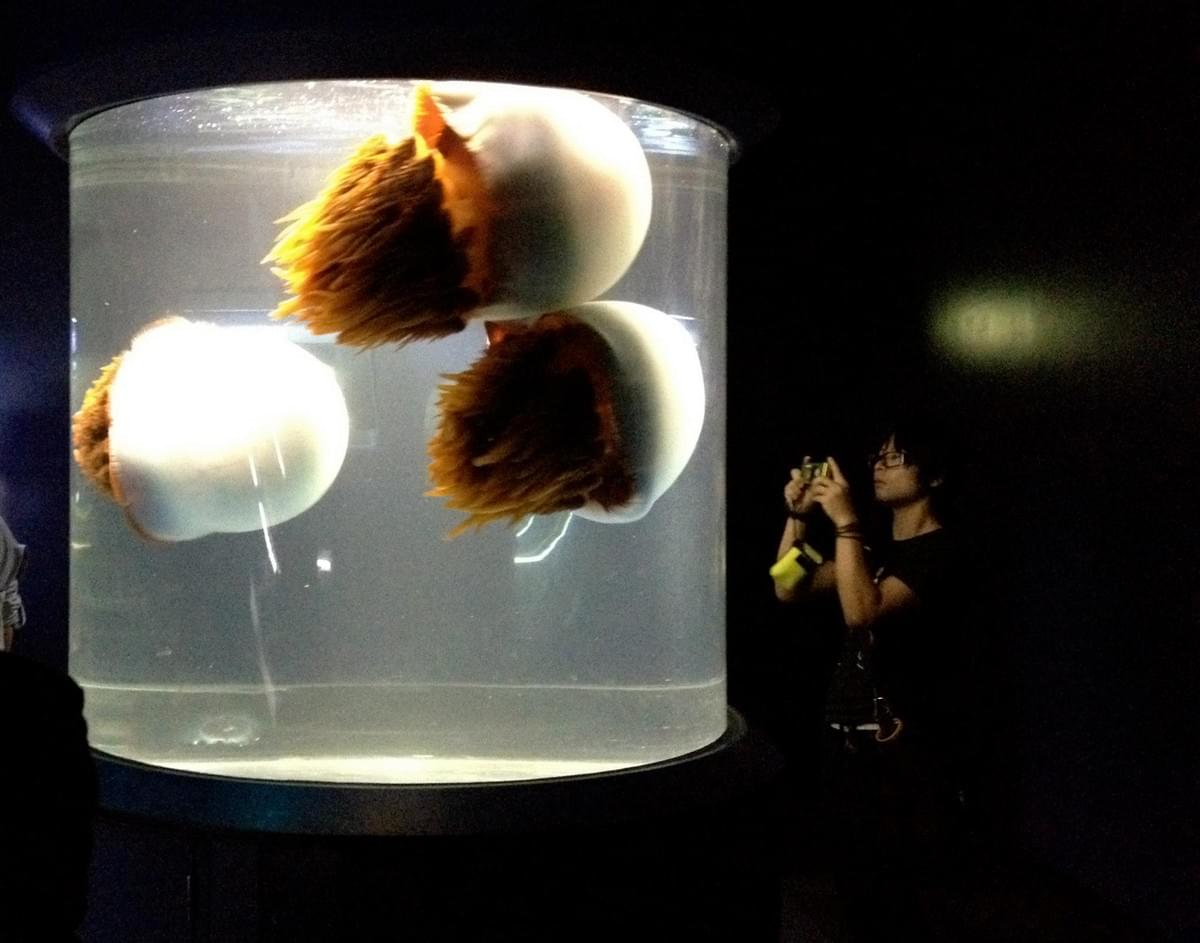
So instead you get touchscreens in glass, carefully timed lighting, soft music, and spaces that feel more like galleries than exhibits. Jellyfish don’t just float. They perform.
At Shinagawa, they drift through dark halls like living lamps.
At átoa, light spills across tanks and walls, turning fish into moving brushstrokes.
It’s quietly ridiculous.
And it works.
A Very Japanese Kind of Excess
Do fish need mood lighting? Probably not. Do koi require orchestral soundtracks and projection mapping? Also probably not.
At átoa, you walk over glass floors above huge white koi, while light and colour ripple across their bodies. There’s a red bridge over a pool of enormous carp, with shifting scenery and music. You can buy koi food - from a vending machine, of course.
Because this is Japan. Where train stations have theme songs and toilets have control panels. Of course aquariums are going to be designed within an inch of their lives.
Restraint, in Japan, often lives inside excess.

And Somehow, They’re Still Quiet
What surprised me most, both at Shinagawa Aquarium and AQUARIUM×ART átoa, was how calm they were. No crowds. No shouting. No queues for photos. Just people moving slowly, whispering occasionally, lingering where they felt like it.
In a country where overtourism is now a constant topic of conversation, that feels almost miraculous. These are beautifully designed, centrally located attractions, and yet they haven’t turned into content factories. They’re still treated as places to experience, not perform in.
It changes everything.
When there’s no pressure to document, you start to notice.

What Makes It Special
What stayed with me wasn’t the technology. It was the care. Someone has thought about where you’ll slow down, where you’ll linger, when you’ll feel calm, and when you’ll feel slightly dazzled. The experience has rhythm. Even though it’s small, it never feels rushed.
People often describe Japan as “high-tech” or “futuristic”.
I think it’s better described as precise.
It takes ordinary things, a train ride, a meal, a bath, an aquarium, and makes them quietly extraordinary.
If you’re interested in these quieter, less obvious sides of Japan, the ones that don’t always make it into guidebooks, that’s the kind of travel I design.